
Last updated October 30, 2026
 House lockouts
 Re-keying
 Deadbolt upgrades
 Smart locks
 Schlage
 Kwikset
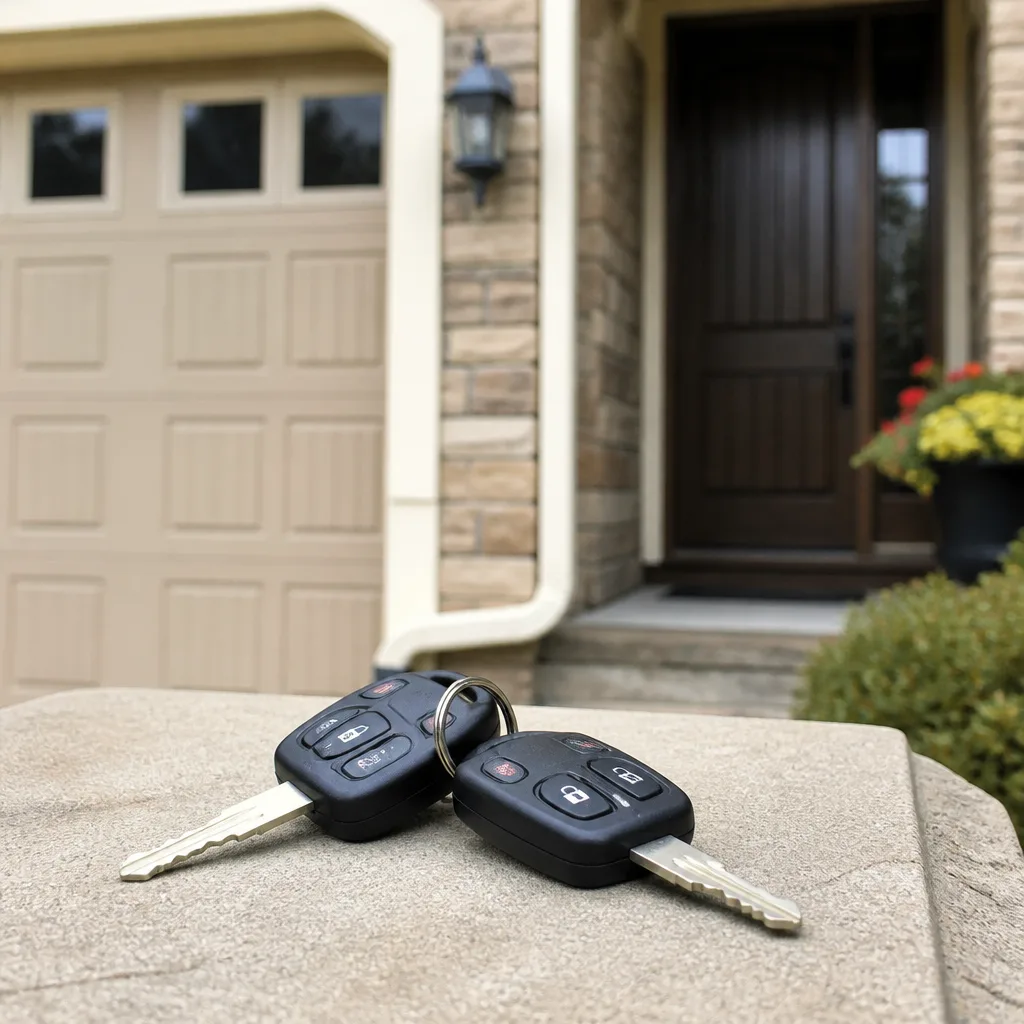 Car keys & fobs
Non-destructive entry first, always - and we re-key Schlage, Kwikset, and Baldwin locks on the spot while you watch
You get a price before we start. It does not change when we arrive. No surprises.
Get your free estimateCar Key Replacement Troubleshooting: Common Problems and How to Fix Them
Most car key failures get misdiagnosed before a locksmith ever picks up the phone. A key that works intermittently is almost never a key problem. It’s usually a failing immobilizer antenna ring around the ignition cylinder, and replacing the key won’t fix it. That single misdiagnosis costs Orlando drivers hundreds of dollars every month in needless key replacements. This guide walks through the actual failure points in modern car key systems, how to test them yourself, and when to stop troubleshooting and call a professional for Car Key Replacement services.
Styles & brands we work with
Quick Answer
Car key replacement troubleshooting starts with identifying which component failed: the key blade, the transponder chip, the vehicle’s receiver module, or the ignition switch. Most intermittent failures trace back to the immobilizer antenna ring or a weak transponder chip rather than the physical key. Test with your spare key first. If the spare works consistently, the problem is your key. If the spare fails too, the problem is your car.
Table of Contents
- Symptom vs. Source: Why Replacing the Key Often Fails
- The Spare Key Test Most Owners Skip
- Transponder Chip Failure: The Silent Key Killer
- Push-to-Start Troubles: What “Key Not Detected” Actually Means
- The Immobilizer Antenna Ring: The Most Misdiagnosed Part
- Receiver Module vs. Ignition Switch: Two Different Repairs
- Why Self-Programmed Keys Backfire
- Orlando-Specific Guidance for Car Key Replacement
- Common Mistakes to Avoid
- When to Call a Professional
- Frequently Asked Questions
- The Bottom Line
Symptom vs. Source: Why Replacing the Key Often Fails
Your car key is not one component. It’s a system of three distinct parts working together: the physical blade that turns the ignition, the transponder chip embedded in the key head that authenticates with the vehicle’s computer, and, on newer vehicles, a radio transmitter for keyless entry or push-to-start. When we see a customer in Orlando holding a brand new key that still won’t start their car, the reason is almost always that the wrong part of the system got replaced.
Think of it like this: if your door lock is jammed, replacing the key doesn’t help. The key was never the problem. Car keys fail the same way. A worn blade causes physical turning issues. A dead transponder chip causes the engine to crank but not fire, or triggers a security light on the dash. A failing receiver module in the car causes “key not detected” warnings even when the key is brand new.
Here are the three most common failure points and what each one looks like:
- Worn key blade: The key turns with difficulty, sticks in the ignition, or won’t turn at all. You’ll feel the mechanical resistance.
- Failed transponder chip: The key turns normally and the engine cranks, but won’t start. A security indicator light typically illuminates on the dashboard.
- Failed immobilizer or receiver in the car: The dashboard shows “key not detected” or a similar message even when the key is right next to the ignition or inside the vehicle.
Before you spend money on a replacement, identify which of these symptoms matches what you’re experiencing. That single step separates a $60 fix from a $400 mistake.
The Spare Key Test Most Owners Skip
The fastest diagnostic tool in car key troubleshooting is already in your drawer: your spare key. Yet most Orlando drivers skip this test entirely and go straight to ordering a replacement online or calling a dealer. Here’s why the spare key test matters so much: it isolates whether the problem lives in the key or in the vehicle.
Follow this sequence:
- Retrieve your spare key. It doesn’t matter if it’s a valet key, a basic transponder key, or a full fob. What matters is that it’s a different physical key than the one giving you trouble.
- Test the spare key in every function: unlock the door, turn the ignition, start the engine.
- Test it three separate times over the course of a day. Intermittent failures can hide behind a single successful start.
- If the spare key works consistently, your problem is the key you were using. Replace it.
- If the spare key fails in the same way, the problem is in your vehicle, not the key. Replacing keys will not solve it.
This test takes under a minute and routinely saves drivers the cost of an unnecessary key replacement. We’ve lost count of how many times a customer in Orlando brought us a vehicle with “key problems” that turned out to be a failing ignition switch or a dying receiver module. The spare key test would have caught it before they spent money on a new key.
One caveat: if your spare key is very old and has never been used, its transponder chip may have degraded through years of sitting. A spare that fails doesn’t always mean the car is the problem. But it’s still faster and cheaper to test the spare than to guess.
Transponder Chip Failure: The Silent Key Killer
Transponder chips have been standard in most vehicles since the late 1990s. The chip sits inside the plastic head of your key and contains a tiny RFID circuit that handshakes with your vehicle’s immobilizer system. When you turn the key, the car sends a signal asking the chip to verify itself. If the chip doesn’t respond, the engine won’t start, even if the key turns perfectly.
Transponder chips fail in two ways: sudden death and slow degradation. Sudden death happens when the chip is physically damaged, often from a drop, a run through the washing machine, or exposure to extreme heat. Slow degradation is subtler. The chip responds intermittently, usually working after a few tries, then failing again weeks later. Owners often describe this as “the key being finicky” or “the car needing a minute to recognize the key.”
Here’s what a failing transponder chip looks like in practice:
- The key turns smoothly with no physical resistance
- The engine cranks but doesn’t catch
- A security light on the dash blinks or stays lit
- The problem is intermittent, sometimes starting on the third or fourth attempt
- After the engine fails to start, waiting 10 to 15 minutes sometimes allows it to start
If this matches what you’re seeing, the fix is a new key with a properly programmed transponder chip. Not a new battery, not a new ignition, not a diagnostic scan. A new key. But here’s the catch: the new chip has to be programmed to your vehicle’s immobilizer system. That programming requires diagnostic equipment that most car owners don’t have. It’s the point where DIY hits a wall for most people, as covered in our The Complete Car Key Replacement Guide for Orlando Homeowners.
Push-to-Start Troubles: What “Key Not Detected” Actually Means
Push-to-start vehicles use proximity keys, also called smart keys or fobs. These keys don’t need to be inserted anywhere. The car detects the fob’s presence through low-frequency antennas mounted around the vehicle and the cabin. When you press the start button, the car pings the fob. If the fob responds, the starter engages. If it doesn’t, you see an error message.
The distinction between two common error messages matters a lot:
- “Key Not Detected” means the car cannot find the fob at all. The fob’s radio signal isn’t reaching the vehicle’s antennas. This is almost always a battery problem, a dead fob, or interference from another electronic device. It is not a programming failure.
- “Key Not Recognized” or “Wrong Key” means the car found the fob but rejected its identity. This is a programming or authenticity issue. The fob’s battery is fine. The car simply doesn’t believe this fob belongs to it.
This distinction changes the repair path entirely. “Key Not Detected” is solved 80% of the time with a fresh fob battery. “Key Not Recognized” requires reprogramming or replacing the fob with one coded to your specific vehicle.
Here’s the error sequence to check on a push-to-start vehicle after installing a new fob battery:
- Replace the battery with a quality branded cell. Cheap cells fail within weeks.
- Hold the fob directly against the start button and press. Many vehicles have a backup NFC-style reader in the start button itself that will recognize a dead fob at contact range.
- If the car starts with the fob against the button but not at distance, the fob battery is weak or the vehicle’s remote antennas are failing.
- If the car still shows “Key Not Recognized” with the fob against the button, the fob’s identity has been lost or corrupted and it needs reprogramming.
One more nuance for Orlando drivers: extreme heat kills fob batteries faster than cold. A car parked in direct Florida sun every day can expect fob battery replacement every 12 to 18 months instead of the 2 to 3 years you’d get in a temperate climate. If your fob range has been shrinking, the battery is usually the culprit.
The Immobilizer Antenna Ring: The Most Misdiagnosed Part
Around your ignition cylinder sits a small ring-shaped antenna. Its job is to read the transponder chip in your key. When that ring fails, the car can no longer authenticate any key, including perfectly good ones. The symptoms mimic a bad key so closely that thousands of car owners replace keys unnecessarily every year.
We see this pattern regularly in Orlando: a customer brings in a car that won’t start. They’ve already bought two replacement keys online. Neither works. The actual problem is a failed immobilizer antenna ring, a part that costs a fraction of what they’ve already spent on keys.
Here’s how to spot immobilizer antenna failure before you buy a new key:
- No key works, including keys that worked reliably for years
- The security light stays lit or blinks rapidly even with the correct key in the ignition
- The engine cranks but never fires, across multiple keys
- The failure got progressively worse over time, starting as intermittent no-starts
- Wiggling the key in the ignition sometimes helps, because the antenna ring sits right next to the cylinder and a loose connection can be temporarily bridged
If two or more keys fail the same way, the keys are not your problem. The antenna ring or its wiring is. This is a job for a locksmith or mechanic with diagnostic equipment, because testing the antenna ring means getting into the steering column and checking resistance on a circuit that is easy to damage if you don’t know where it runs.
Receiver Module vs. Ignition Switch: Two Different Repairs
When the spare key test points to the vehicle rather than the key, two components become the prime suspects: the receiver module or the ignition switch. They are different parts, they fail differently, and they cost differently to fix.
The receiver module is the electronic brain that processes the transponder signal from your key. In some vehicles it’s a standalone box under the dash. In others it’s integrated into the body control module. When it fails, the car stops recognizing keys entirely. The symptom set looks like this:
- All keys fail the same way, including ones that worked recently
- The security system acts as if no key is present even when the correct key is in the ignition
- The failure is consistent, not intermittent
- No amount of patience or re-inserting the key changes the outcome
The ignition switch is purely mechanical. It’s the part that the key turns to close the electrical circuit that powers your vehicle’s systems. When the ignition switch fails, the physical symptom set is different:
- The key turns with unusual resistance, or turns too freely with no click
- Electrical accessories flicker or fail when the key is in certain positions
- The key gets stuck in the ignition or won’t insert smoothly
- The starter engages inconsistently when the key is turned to the start position
These are three different problems with three different price points. An ignition switch replacement is usually the cheapest of the three. A receiver module is more expensive. A body control module failure in a European vehicle can be the most expensive of all. Knowing which one you’re dealing with before you authorize a repair keeps you from paying for the wrong job. If you’re in Orlando, a professional diagnostic with the right scan tool can identify the failed component quickly. More on that at Car Key Replacement in Orlando.
Why Self-Programmed Keys Backfire
Online marketplaces are full of “replacement key” listings that promise self-programming with simple instructions. Some of them work for very old vehicles. Most of them don’t work for anything made in the last 15 years. And a significant number of them trigger anti-theft lockouts that cost more to clear than a professional replacement would have cost in the first place.
Modern vehicles have immobilizer systems designed to detect unauthorized key programming attempts. When you attempt to program a key that isn’t genuine, or you follow an incorrect procedure, the vehicle can enter a security lockout state. In that state, the car refuses to start even with the original key. Clearing the lockout requires a dealer-level scan tool or a security code that most owners cannot access.
The pattern we see in Orlando:
- Owner buys a $25 blank key online
- Owner follows a YouTube video or the seller’s printed instructions
- The programming sequence fails partway through
- The vehicle locks down and won’t accept any key, including the working original
- The owner now needs a tow plus a professional to clear the lockout and program a proper key
- Total cost: $250 to $600, about double what a professional key replacement would have cost
This sequence plays out weekly. Search forums for any vehicle model and you’ll find the same story repeated. The car key industry has moved firmly into encrypted, dealership-grade territory. On a 2005 Honda, a basic self-programmed key might work. On anything from 2010 forward, you’re gambling.
The honest advice: if your vehicle uses a transponder key, a proximity fob, or a push-to-start system, key programming is a professional job. The equipment to do it correctly costs thousands of dollars. The risk of doing it wrong is a vehicle that won’t start at all. The math doesn’t favor DIY on this one.
Orlando-Specific Guidance for Car Key Replacement
Orlando’s climate and driving patterns create a specific set of car key failure modes worth knowing about. Heat, humidity, and tourism-driven wear patterns all affect how often and why keys fail here versus other markets.
Heat is the biggest factor. Interior temperatures in a parked Florida car routinely exceed 140 degrees Fahrenheit in summer. That heat degrades the plastic housings on key fobs, warps key blades, and shortens the lifespan of fob batteries. A key fob that lasts five years in Minneapolis might fail in three years in Orlando. If your fob has been getting temperamental during the summer months, heat exposure is likely a contributing factor.
Humidity contributes too. Moisture intrusion into key fobs corrodes the circuit boards and battery contacts. We’ve opened fobs from Orlando vehicles that showed visible green corrosion on the battery terminals. A fob that has been through a rainy season or a splash in a pool often fails within weeks, even if it works briefly afterward.
Orlando also has one of the highest rates of rental car turnover in the country. For rental fleets, key replacement frequency is high because keys are abused and lost at rates most private owners never experience. If you’re buying a used vehicle that spent time in a rental fleet, check all keys carefully. Replacement fobs from rental companies are often aftermarket units with shorter lifespans.
For help with any of these issues, our Ashgrove Locksmith home page covers the full range of residential, commercial, and automotive services we offer across Orlando.
Common Mistakes to Avoid
- Replacing the key before testing the spare. If your spare key fails too, the key isn’t the problem. You’ll spend money on a replacement and still can’t start your car.
- Buying the cheapest blank online. Cheap blanks often use inferior transponder chips that fail quickly or won’t program at all. What you save on the part, you lose on the programming attempt.
- Ignoring the dashboard warning light. That flashing security light is your vehicle’s diagnostic message. It tells you the immobilizer system is involved. Ignoring it and guessing wastes time and money.
- Attempting DIY programming on a modern vehicle. The anti-theft lockout risk is real, and clearing one costs more than a professional key replacement would have cost.
- Assuming “key not detected” means the key is dead. On push-to-start vehicles, this message often means the fob battery is dead, not the key itself. A $2 battery might solve it.
- Waiting until the only key fails completely. If you have one working key and it’s showing signs of wear, get a spare made now. The cost of a planned replacement is nothing compared to an emergency lockout-plus-tow scenario.
- Throwing away a key after a failed programming attempt. Keys that have been through a failed programming sequence can sometimes be recovered. Don’t assume it’s ruined until a professional has looked at it.
When to Call a Professional
Some car key problems resolve with a fresh fob battery or a quick spare key test. Others require equipment and expertise that only a professional has. Call a locksmith when your vehicle shows any of these patterns: the security light stays lit with every key you own, the car enters a lockout state after a programming attempt, you have one key left and it’s showing signs of failure, or you’ve replaced the key already and the problem persists. All of those scenarios point to a component beyond the key itself. For help vetting who to call, see our Choosing the Right Locksmith Brand: A Buyer’s Guide for Orlando.
Ashgrove Locksmith offers free estimates in Orlando. We work with transponder keys, proximity fobs, and push-to-start systems across most major vehicle makes. Call (833) 713-2331 before you tow the car. The diagnosis on the phone costs nothing, and a lot of what looks like a key emergency isn’t one. For immediate lockout situations, see Emergency Locksmith in Orlando.
Frequently Asked Questions
A basic transponder key replacement in Orlando typically runs $120 to $250 depending on the vehicle make and year. Proximity fobs and push-to-start smart keys run higher, usually $200 to $400. The full price should be quoted on the phone before anyone is dispatched, and that quoted price should be the price on the invoice. Call (833) 713-2331 for an exact quote for your vehicle. Estimates are free.
It should be, and any reputable locksmith will honor the phone quote as the invoice price. If a locksmith adds surprise fees on arrival, question it. Ask for the full out-the-door price before you agree to dispatch. At Ashgrove Locksmith, the price we quote is the price you pay.
Response times vary by location and time of day, but most Orlando-area locksmiths can reach you within a reasonable window during normal business hours. Emergency calls outside business hours may take longer. Always confirm the ETA when you call. We don’t quote response windows we can’t honor.
Ask what equipment they use and which vehicle makes they program. A qualified automotive locksmith will name specific tools and vehicle platforms without hesitation. If the answer is vague, keep looking. The same applies to residential hardware like Schlage, Medeco, or Yale systems; a capable locksmith will talk about specific brands and methods.
Yes. A locksmith with the right equipment can generate a new key from the vehicle’s VIN in most cases, or by reading the lock cylinder directly on older vehicles. This is a standard service, not a dealer-only job. You’ll need proof of ownership and your VIN.
Rekeying is usually the smarter move when your existing hardware is in good condition. The locksmith reconfigures the internal pins so old keys stop working and new keys operate the lock. It costs less than replacing hardware and gives you the same security outcome. If your hardware is worn, damaged, or you want to upgrade to higher-security brands like Medeco or Abloy, replacement makes more sense. For more on the rekeying process, see Rekey Locks in Orlando.
The Bottom Line
Car key failures get expensive when the wrong part gets replaced. Most of the time, the key isn’t the problem. The transponder chip inside the key, the immobilizer antenna ring around the ignition, or the receiver module in the vehicle is the real culprit. Test with your spare key before you spend money. Distinguish “key not detected” from “key not recognized.” Skip the DIY programming on modern vehicles. And when the problem outruns your ability to diagnose it, call a professional. In Orlando, that’s Ashgrove Locksmith at (833) 713-2331. Free estimates, honest answers, one number.
Written by the team at Ashgrove Locksmith, serving Orlando since 2017. Explore more guides & resources.