
Last updated October 30, 2026
 House lockouts
 Re-keying
 Deadbolt upgrades
 Smart locks
 Schlage
 Kwikset
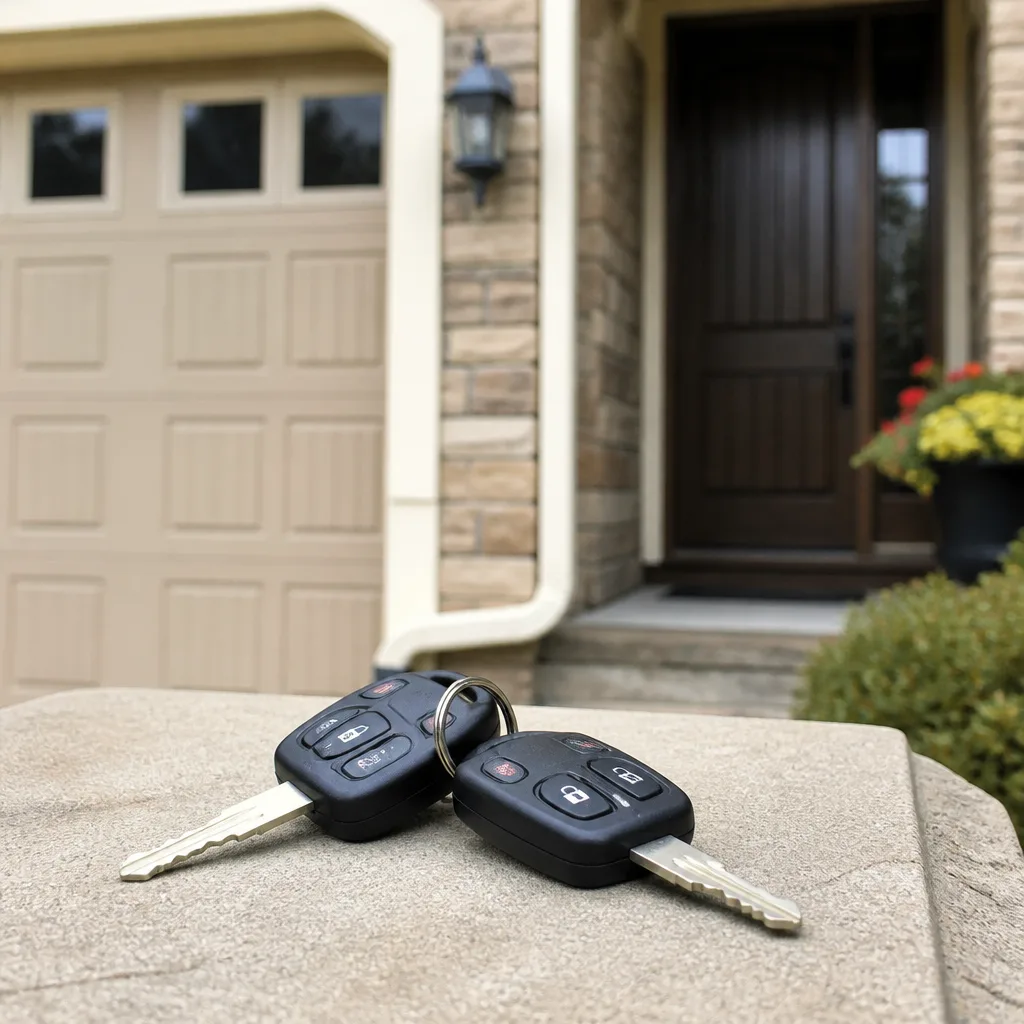 Car keys & fobs
Non-destructive entry first, always - and we re-key Schlage, Kwikset, and Baldwin locks on the spot while you watch
You get a price before we start. It does not change when we arrive. No surprises.
Get your free estimateCar Key Replacement Maintenance Checklist for Orlando Homeowners
Most Orlando homeowners don’t think about their car key until it’s already dead in a parking lot off I-4. That’s the expensive way to do it. The average transponder key replacement through a dealership runs $250 to $600, and even a locksmith replacement typically lands between $150 and $400 depending on the vehicle. But here’s what almost nobody tells you: most key failures announce themselves weeks ahead of time. A slow transponder response, a fob that needs to be closer to the door than it used to, a blade that wiggles in the ignition. This guide walks through a practical maintenance checklist that catches these early warning signs before you’re stranded, and covers what Orlando’s heat and humidity specifically do to accelerate key wear. If you drive in this city, this is the checklist that keeps a $4 battery swap from becoming a $400 emergency.
Quick Answer
A car key maintenance routine should include a monthly visual inspection of the blade and shell, a 90-day fob battery check, and keeping a pre-cut spare before the primary key shows any sign of failure. Car key replacement in Orlando costs $150 to $400 through a locksmith for most transponder keys, and the majority of failures stem from three preventable causes: worn blades, dead or corroded fob batteries, and cracked shells that let Florida humidity reach the transponder chip.
Styles & brands we work with
Table of Contents
- The 10-Point Car Key Inspection Checklist
- How Orlando Heat and Humidity Attack Your Car Key
- Worn Blade Copy, Decode, or Replace: What Each Costs
- The Spare-Key Economics: Why Pre-Cutting Beats Emergency Replacement
- Locksmith vs. Dealership: Who Handles What Faster
- Realistic Replacement Costs for Common Orlando Vehicles
- How to Extend the Life of a Transponder Key in Orlando
- Common Mistakes to Avoid
- When to Call a Professional
- Frequently Asked Questions
The 10-Point Car Key Inspection Checklist
Run through this list once a month. It takes under five minutes and catches every failure mode we’ve seen cause a key to die without warning in Orlando. Most of these checks require nothing but your eyes and your hands. A few take a voltmeter if you want to be thorough, but you can skip that and still catch 80% of problems.
- Blade wear depth. Hold the key up to a light. The ridges and valleys along the blade edge should look crisp, not rounded or flattened. A key that’s been turning ignitions for five or six years will start to show visible smoothing on the peaks. If the peaks look worn down by half or more, that blade is on borrowed time.
- Shell cracks around the key ring hole. This is the most common failure point on flip keys and switchblade-style fobs. The key ring puts constant pressure on the plastic loop, and Florida UV light makes the plastic brittle faster than in northern climates. Check for hairline cracks radiating from the key ring opening.
- Seam separation on split-shell fobs. Run a fingernail along the seam where the two halves of the fob meet. If it opens even slightly, humidity is getting inside. The transponder chip and battery contacts corrode quickly once Orlando’s moisture reaches them.
- Button membrane flattening. Press each button. It should have a clear, tactile click. Buttons that feel mushy or require a harder press than they used to have a degrading rubber membrane underneath. This is the first sign the fob interior is aging.
- Transponder response lag. Insert the key and turn to the ON position without starting. Watch the security light on the dash. If it blinks for more than a second or two before going solid, the transponder chip is responding slowly. This is a warning sign that can show up months before a full failure.
- Fob range reduction. Stand 15 feet from your car and press unlock. Then try 30 feet. If the range that worked a few months ago no longer reaches, the fob battery is weakening or the internal antenna contacts are corroding.
- Battery voltage check. If you have a multimeter, open the fob and check the CR2032 or equivalent battery. A fresh battery reads 3.2 to 3.3 volts. Anything under 3.0 volts needs replacement now. Anything under 2.8 volts has likely already affected range and response time.
- Ignition cylinder wiggling. Put the key in the ignition and gently wiggle it side to side. A small amount of play is normal. If the key feels loose or the ignition doesn’t catch the key firmly, the blade is worn to the point where the cylinder can’t hold it securely. This is when keys snap off in the ignition.
- Proximity key detection delay. For push-to-start vehicles, time how long it takes from grabbing the door handle to the door unlocking. If you’re standing there for two or three seconds when it used to be instant, the proximity sensor or the key’s internal antenna is degrading.
- Corrosion on exposed metal. Look at the metal blade where it meets the plastic shell. White or green powdery residue means corrosion is forming. In Orlando’s humidity, this spreads into the shell and reaches the transponder chip faster than you’d expect.
If you find two or more of these warning signs, the key has already started failing. The window to address it cheaply is open now, not after it strands you.
How Orlando Heat and Humidity Attack Your Car Key
Orlando is uniquely hard on car keys, and it’s not just the temperature. The combination of sustained heat, daily humidity swings, and intense UV exposure creates conditions that accelerate key failure in ways most national maintenance guides simply don’t account for. A car key that would last eight years in Minnesota often fails at five or six in Orlando.
The heat affects keys in two ways. First, internal battery chemistry degrades faster. Fob batteries are lithium coin cells, and lithium cells lose capacity faster at high temperatures. A key fob left on a dashboard or center console in a Florida parking lot can reach internal temperatures well over 130°F on a summer afternoon. At that temperature, a CR2032 battery that would last two to three years in a cooler climate can drop to 18 months or less. Second, the plastic shell and adhesive layers expand and contract with each heating cycle. Orlando’s daily temperature swing, especially in spring and fall when mornings are cool and afternoons are hot, puts repeated stress on the seam where the two halves of the key fob are joined. The adhesive eventually fails, the seam opens, and then the real problem starts.
Humidity is the second factor. Orlando averages 75% relative humidity year-round, with summer months often exceeding 90%. When a key fob shell separates even slightly, that moisture-rich air enters the interior. The transponder chip, which is a sealed glass capsule in most keys, is actually fairly resistant. The problem is the battery contacts and the circuit board traces. Moisture plus the small electrical currents flowing through the fob create corrosion on the contact points. Once the battery contacts corrode, the fob starts behaving erratically: sometimes it works, sometimes it doesn’t, sometimes you need three presses to unlock the door. People mistake this for a dying battery and replace the battery without cleaning the contacts. The problem comes back within weeks.
The 90-day check interval is the right rhythm for Orlando. That’s frequent enough to catch a weakening battery before it dies, and frequent enough to spot seam separation before significant corrosion sets in. Set a calendar reminder on your phone. It’s the same cadence as changing your home’s AC filter, and it’s equally unglamorous and equally necessary in this climate.
Worn Blade Copy, Decode, or Replace: What Each Costs
When your key blade is worn, you don’t always need a full replacement. There are three distinct levels of intervention, and knowing which one you’re at determines whether you spend $20, $80, or $300. The difference comes down to how much data is left on the blade and whether the transponder chip is still healthy.
Level 1: Worn Blade That’s Still Cuttable
If the blade is visibly worn but the cuts (the valleys and peaks) are still discernible, a locksmith with a key-cutting machine can duplicate it directly. The duplicate will be a fresh blade with the same cut depth, and it will grip the ignition pins more firmly than the worn original. This is the cheapest intervention. In Orlando, a standard metal key copy runs $10 to $30. For a transponder key with a chip, a duplicated blade with the chip transferred runs $80 to $150 depending on the vehicle. The key point: if the cuts are still readable, you don’t need programming, you just need a fresh blade.
Level 2: Worn Blade That Needs Decoding
At a certain point, the cuts get so worn that a key machine can’t reliably trace them. This is common on keys that are 10 or more years old, or keys that have been used hard (fleet vehicles, rideshare cars, anything with multiple start cycles per day). When a key can’t be traced, a locksmith has to decode it by reading the mechanical cuts and key code. This takes longer and costs more. In Orlando, decoding and cutting a replacement is typically $75 to $120 for a basic key, and $150 to $250 for a transponder key. The transponder chip itself, if working, can often be cloned or transferred, but if it’s too weak to read, you’re moving into Level 3.
Level 3: Transponder Re-Pairing vs. Full Replacement
When the transponder chip is failing or dead, the key needs to be programmed, not just cut. This is where costs jump. A locksmith who handles automotive key programming can pair a new transponder chip to your vehicle’s immobilizer system. This typically runs $150 to $400 in Orlando, depending on the vehicle’s security architecture. Some vehicles allow a new key to be programmed on the spot. Others require the existing key to be present for a “learning” procedure. If you’ve lost all keys, that’s a different situation entirely and usually costs more because the vehicle’s immobilizer must be reset. The chip failing while the blade is still usable is the most common reason homeowners end up calling for car key replacement in Orlando as an emergency rather than on their own schedule.
The Spare-Key Economics: Why Pre-Cutting Beats Emergency Replacement
The single smartest car key decision you can make in Orlando is cutting a spare while your primary key is still perfectly functional. The math is straightforward and the contrast is stark. A spare transponder key made and programmed while the original is healthy costs $80 to $200 depending on your vehicle. That is a planned, non-urgent expense. An emergency replacement when the only key is lost or snapped in the ignition costs $150 to $400 for a locksmith and $250 to $600 at a dealership, plus a tow if the car is immobilized. In the worst case, when no key exists at all and the vehicle requires an immobilizer reset, you’re looking at $400 to $800 and possibly a day without your car.
The price difference isn’t just the urgency. When you have a working key, the locksmith can clone or program the new key against the existing one. When you don’t, the locksmith has to work from the vehicle’s VIN to extract the key code and may need dealership-level tools to reset the immobilizer. That extra labor and tooling is what pushes the emergency price up. You are paying for the complexity of the situation, not for a better key.
For common Orlando vehicles, the spread looks like this:
- Older Honda and Toyota models (2005-2015): Spare key $80-$120, emergency replacement $150-$250.
- Ford and Chevrolet models (2010-2020): Spare key $100-$180, emergency replacement $180-$350.
- European models (BMW, Mercedes, VW): Spare key $200-$400, emergency replacement $350-$700.
- Push-to-start proximity keys (all makes): Spare key $150-$300, emergency replacement $250-$500.
The pattern holds across every make. A spare bought before the failure costs roughly half what an emergency replacement costs. And beyond the money, there’s the time. An emergency replacement can take hours if the immobilizer needs resetting. A planned spare takes 30 to 45 minutes at a locksmith’s shop or mobile visit, and you walk away with the same day’s use of two working keys.
If you own one car and one key, you are one lost key away from a disrupted week. If you have two keys, losing one is an inconvenience. That’s the whole argument.
Locksmith vs. Dealership: Who Handles What Faster
Most Orlando homeowners default to the dealership for car key work because that’s where they bought the car. It’s the path of least mental resistance. But for the majority of key replacement scenarios, a qualified automotive locksmith is faster, more convenient, and substantially cheaper. Here’s where each one fits.
A locksmith handles the following better than a dealership:
- Cutting a new key from an existing one. Locksmiths cut keys all day, every day. Dealerships often outsource cutting or use the same machines but charge dealership labor rates.
- Programming a transponder key. Automotive locksmiths own the programming tools for most vehicles made in the last 20 years. This is a core service, not an add-on.
- Replacing a lost key when you have no backup. Many locksmiths can extract the key code from the VIN and cut and program a new key at your home or office. The dealership requires you to tow the vehicle in.
- Emergency lockout with key replacement. This is where the difference is most dramatic. An emergency locksmith in Orlando comes to you, opens the car, cuts the key, and programs it on the spot. The dealership requires you to get the car to them first.
- Replacing a worn key shell while reusing the chip. If the chip is good but the plastic shell is cracked, a locksmith can transfer the chip to a new shell and blade for a fraction of the cost of a full dealer replacement.
The dealership is the right call in exactly one scenario: factory-reset EEPROM programming. Some newer vehicles, especially European models and vehicles with advanced anti-theft systems, require the immobilizer’s EEPROM (the memory chip that stores key data) to be reset and reprogrammed. This is a job that requires dealer-level software and a secure connection to the manufacturer’s database. Most independent locksmiths either can’t do it or refer it out. If your vehicle is less than five years old and the key system is out of ordinary operation, the dealership may be the only viable option. For everything else, a locksmith is faster and more affordable.
Realistic Replacement Costs for Common Orlando Vehicles
Costs vary by vehicle, but having a realistic range before you call prevents sticker shock and gives you a benchmark to judge any quote against. These are Orlando market ranges for locksmith service, not dealership pricing.
| Vehicle Category | Example Makes | Spare Key (with working original) | Emergency Replacement (no working key) |
|---|---|---|---|
| Older sedans and SUVs | Honda CR-V, Toyota Camry, Ford Explorer (2000-2012) | $60-$120 | $120-$250 |
| Mid-range transponder | Honda Accord (2013+), Hyundai Elantra, Nissan Altima | $80-$180 | $150-$350 |
| Push-to-start proximity | Toyota RAV4 (2015+), Ford Escape (2014+), Honda Pilot (2016+) | $150-$300 | $250-$500 |
| European luxury | BMW 3 Series, Mercedes C-Class, Audi A4 | $200-$400 | $350-$700 |
| Domestic trucks | Ford F-150, Chevy Silverado, Ram 1500 | $100-$250 | $200-$400 |
These are working ranges for the Orlando market as of this writing. Specific quotes depend on the exact year, the key type, and whether the vehicle requires on-board programming or EEPROM work. The most important number to know is the full price before anyone is dispatched, and any professional locksmith should be able to give you that number over the phone based on your vehicle’s year, make, and model.
How to Extend the Life of a Transponder Key in Orlando
You can’t stop a key from wearing eventually, but you can add years to its life with habits that cost nothing. Here are the ones that matter most in Orlando’s climate.
- Never leave the key in a hot car. The interior of a parked car in Orlando can exceed 150°F in direct summer sun. That heat cooks the fob battery and accelerates plastic shell degradation. Take the key with you or, if it must stay in the car, keep it in the glove box or center console where it’s at least shaded.
- Keep the key away from moisture. Kitchen counters, bathroom sinks, pool decks. The more often the key is exposed to humidity and water splashes, the faster corrosion forms on the internal contacts. A key on a lanyard at the pool or beach is getting dosed with salt air and water.
- Don’t hang heavy objects from the key ring. Multiple keys, tools, decorative charms. All that weight pulls on the shell around the key ring hole, accelerating the cracks that eventually let humidity reach the chip. Keep the car key on its own ring or with one or two lightweight items.
- Use the key, don’t throw it around. Tossing keys onto a counter or dropping them into a purse with metal objects causes micro-fractures in the shell over time. The plastic on transponder keys is not designed for daily impact.
- Replace the battery at the first sign of weak operation. Don’t wait until the fob stops working. If range drops or you need repeated presses, that’s the battery telling you it’s done. A $4 battery today prevents a stranding later.
- Have a spare made now, not when you need it. This is the proactive step that makes every other maintenance task optional. Two working keys means one can fail without taking your week down with it.
These habits do not replace the monthly inspection, but they extend the intervals between needing replacements and make the inspection checklist easier to pass.
Common Mistakes to Avoid
- Ignoring a slow transponder response. When the dash security light lingers before going solid, the chip is on the decline. Waiting until it fails means an emergency replacement at emergency prices instead of a planned spare at normal prices.
- Replacing only the battery when the fob acts up. If the problem is corroded contacts or a degrading chip, a new battery won’t fix it. The fob will work for a few weeks and fail again. Diagnose, don’t guess.
- Going to the dealership first by default. For most key replacements, an automotive locksmith in Orlando is faster, comes to you, and charges 30-50% less. The dealership is only necessary for factory-reset EEPROM situations.
- Copying a worn key instead of decoding it. If the original blade is badly worn, a direct copy reproduces the wear, not the original cut. A decoded replacement is cut to factory spec and grips the ignition pins properly. A copy of a worn key is still a worn key.
- Supergluing a cracked shell. It looks fixed, but the hairline gaps remain and humidity still gets in. Worse, cured superglue makes it harder for a locksmith to open the shell properly when the chip finally needs extracting.
- Waiting until there’s no key left to make a spare. The entire cost difference between a $100 spare and a $400 emergency replacement exists because you’re creating the emergency by not acting sooner. There’s no version of this where waiting saves money.
- Assuming a dead fob means a dead key. Many vehicles with push-to-start still have a physical key blade hidden inside the fob. Even if the fob is dead, the blade can open the door and, in some vehicles, start the car via a backup slot. Know where your backup entry method is.
When to Call a Professional
Some things you handle with a battery swap and a visual check. Others need a locksmith with automotive programming tools. Call a professional when you see a cracked shell that’s opening at the seam, when the key is clearly worn but your car won’t start reliably, when the transponder response is fading, or when you’re down to one key and want a spare before the situation gets worse. If you’ve lost all keys, don’t attempt to resolve it yourself. A locksmith can extract the key code from your VIN and cut and program a new key on the spot in most cases. If you’re not sure what’s wrong with your key, our Car Key Replacement Troubleshooting: Common Problems and How to Fix Them guide may help, or call Ashgrove Locksmith for free estimates in Orlando. Call (833) 713-2331 and describe the symptoms. A realistic quote is available before anyone is dispatched, and the price quoted on the phone is the price on the invoice. No call-out surcharge added on arrival.
Frequently Asked Questions
Car key replacement in Orlando typically costs $150 to $400 through a locksmith for most transponder keys, with basic metal keys running $10 to $30 and high-end European proximity keys running up to $700. Dealership pricing runs to $250 to $600 for the same service. The exact figure depends on your vehicle’s year, make, and key type. Call (833) 713-2331 for a specific quote. Estimates are free.
Any professional locksmith should give you a firm quote over the phone before dispatching anyone, based on your vehicle’s year, make, and model. That quoted price should be the price on your invoice, with no surprise call-out fee added when the technician arrives. If a company won’t give a firm number over the phone, that’s a red flag. Call (833) 713-2331 for an exact quote before scheduling.
Most transponder key replacements can be completed in 30 to 60 minutes on site once the locksmith arrives. Mobile service means the locksmith comes to you, whether you’re at home, at work, or parked near Lake Eola. No tow to a dealership required. For an EEPROM reset situation, allow additional time as that requires specialized tools. Call (833) 713-2331 to confirm availability.
Yes, in most cases. If the blade is readable, a direct copy works. If it’s too worn to trace, the key can be decoded from the cuts and key code, and a replacement cut to factory spec. The transponder chip, if still functioning, can be cloned or the new key can be programmed to the vehicle. A spare made from a worn original is always better than waiting until the original fails entirely.
Yes. Orlando’s 75-90% humidity accelerates corrosion on fob battery contacts and circuit board traces, especially once the shell develops hairline cracks. A key that lives in this climate will typically fail one to two years earlier than the same key in a drier region. Regular inspection and keeping the key away from moisture are the two most effective countermeasures.
No, not for most vehicles. Independent automotive locksmiths own programming tools for most push-to-start systems and can cut and program proximity keys at your location. The dealership is only necessary for vehicles requiring factory-reset EEPROM programming, which is typically newer European models or vehicles with advanced immobilizer systems. Call (833) 713-2331 to confirm what your specific vehicle needs.
The Bottom Line
Your car key is a mechanical and electronic device that wears predictably, and Orlando’s heat and humidity wear it faster than most places. For more guides & resources on keeping your keys working, explore our blog. The difference between a $4 battery swap and a $400 emergency replacement is attention. Run the 10-point inspection monthly. Check the fob battery every 90 days. Make a spare while your primary key is still healthy, because a spare bought before failure costs half what an emergency replacement costs. And when the key needs professional attention, know that a locksmith handles most situations faster and for less than a dealership. The only losing move is waiting until there’s no key left to work with.
Written by the team at Ashgrove Locksmith, serving Orlando since 2017.