Last updated October 30, 2026
 Smart locks
 House lockouts
 Re-keying
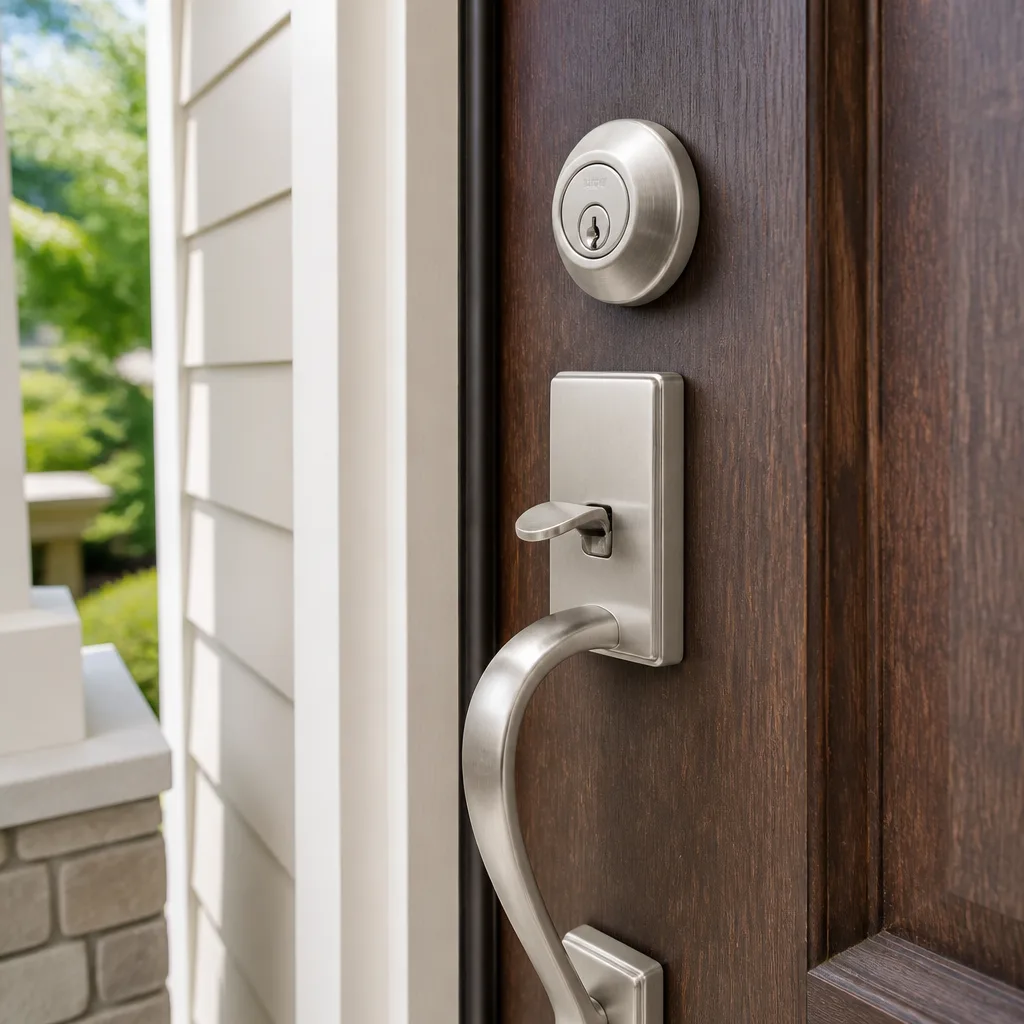 Deadbolt upgrades
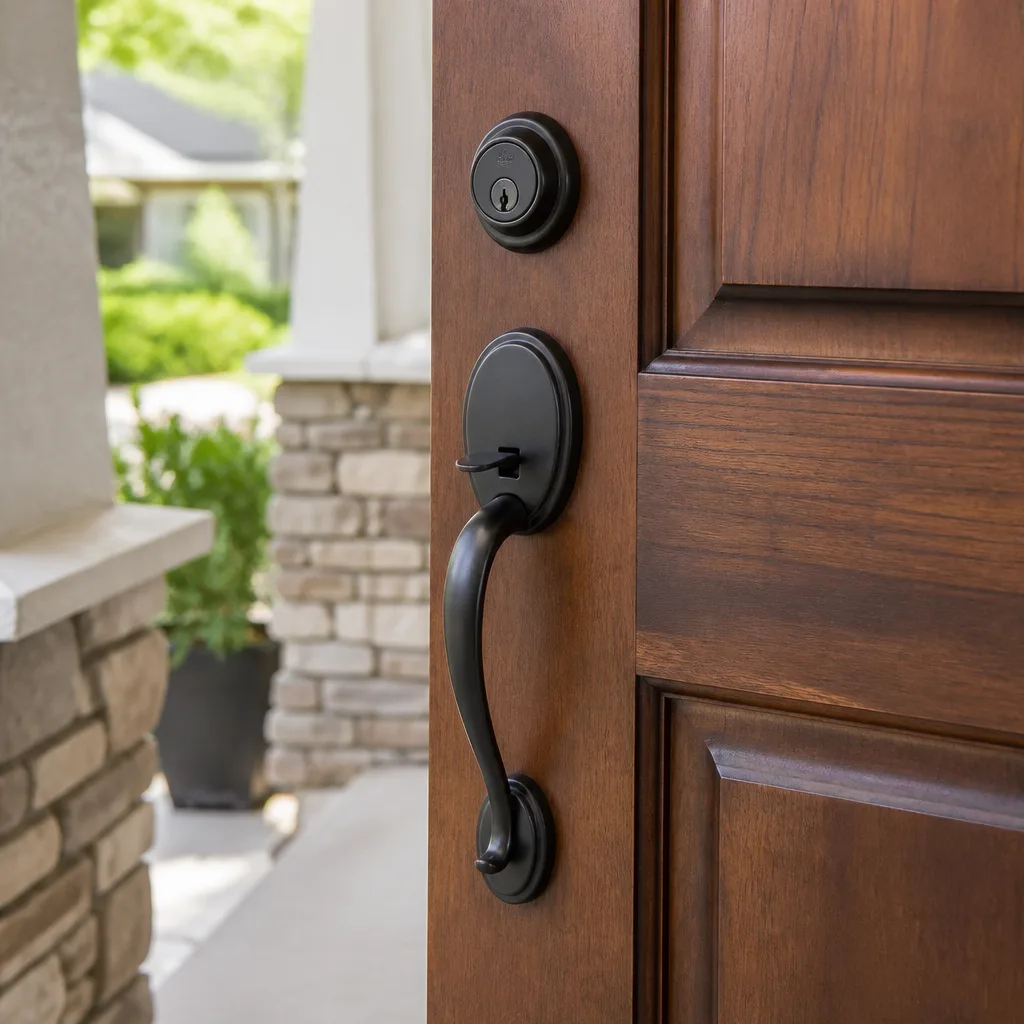 Schlage
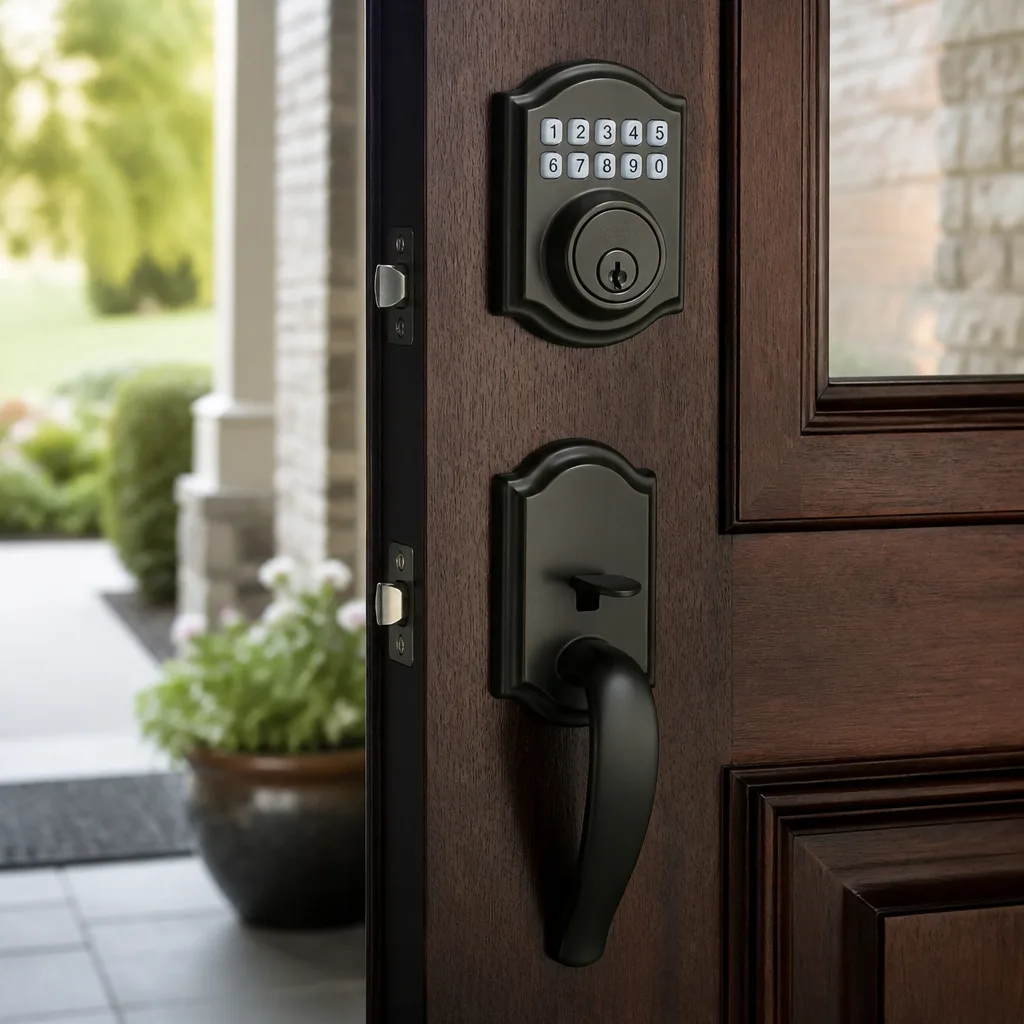 Kwikset
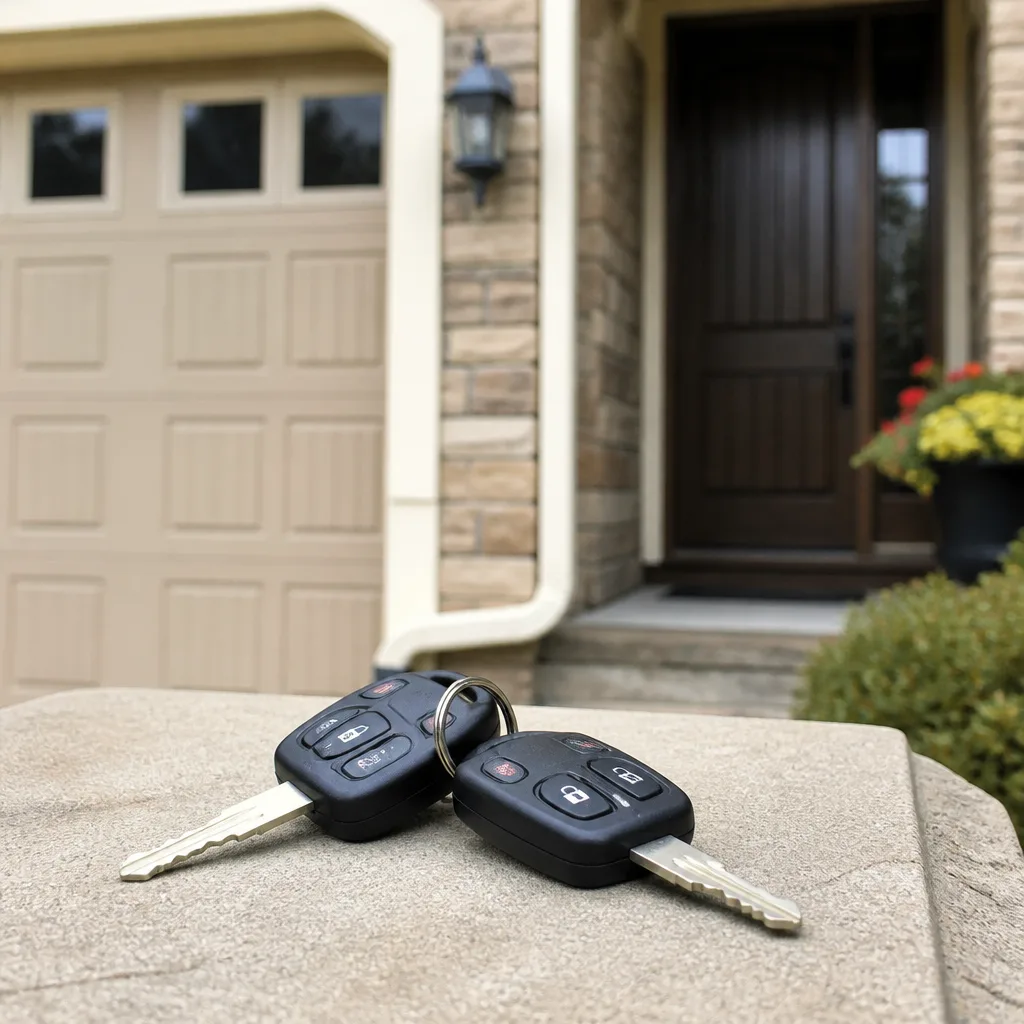 Car keys & fobs
Non-destructive entry first, always - and we re-key Schlage, Kwikset, and Baldwin locks on the spot while you watch
You get a price before we start. It does not change when we arrive. No surprises.
Get your free estimateSeasonal Locksmith Care for Orlando: Year-Round Homeowner’s Guide
Most national locksmith guides assume your front door freezes in January. Ours doesn’t, because Orlando’s doesn’t. What we deal with instead is a climate that attacks locks differently: nine months of humidity that seeps into pin tumbler cylinders, summer heat that warps wood door frames until deadbolts misalign, and a tourist-season population surge that changes property crime patterns in measurable ways. This guide maps the Orlando locksmith calendar by season, showing exactly what to check, when to check it, and which fixes actually hold up in Central Florida conditions. By the end, you’ll have a maintenance rhythm tuned to how locks actually fail here, not how they fail in Chicago.
Styles & brands we work with
Quick Answer
Seasonal locksmith care in Orlando means adjusting your maintenance to Florida’s climate cycles: lubricate cylinders with PTFE-based products (never graphite) before summer humidity peaks, align and reinforce deadbolts ahead of hurricane season in May and June, rekey rental and vacation properties before snowbird arrivals in October, and upgrade to ANSI Grade 1 deadbolts with security strike plates during the winter tourist crime surge. A six-month inspection calendar covering these windows prevents most Orlando lock failures and forced-entry vulnerabilities.
Table of Contents
- Orlando’s Climate and How It Actually Affects Locks
- Pre-Hurricane Season (May – June): Frame Flex and Forced Entry
- Summer (July – September): Humidity, Swelling Frames, and Lubricant Choice
- Fall Snowbird Arrival (October – November): Rekeying Before New Occupants
- Winter Tourist Peak (December – March): Crime Patterns and Hardware Upgrades
- Year-Round: Building a 6-Month Lock Inspection Calendar for Florida
- Common Mistakes to Avoid
- When to Call a Professional
- Frequently Asked Questions
- The Bottom Line
Orlando’s Climate and How It Actually Affects Locks
Locks fail differently in Orlando than they do in most of the country. Northern states contend with ice seizing cylinders and metal contracting in sub-zero cold. Orlando contends with the opposite problem set: sustained humidity above 70% for months at a time, daily summer rains, and UV exposure that degrades exterior hardware finishes faster than coastal salt air degrades metal in Fort Lauderdale. The result is that the average Orlando deadbolt sees more moisture-driven wear in a single summer than a Minneapolis deadbolt sees over three full years.
Humidity works on locks through several mechanisms. The first is corrosion: the internal springs and pins inside a standard pin tumbler cylinder are brass or steel, and when moist air circulates through the keyway, those small parts oxidize gradually. The second is lubricant failure: the most commonly recommended lock lubricant, powdered graphite, is hygroscopic in practice despite marketing claims to the contrary. In Orlando’s humidity, graphite absorbs airborne moisture and turns into a paste that thickens cylinder movement rather than smoothing it. We see this constantly in the field: cylinders packed with graphite sludge that a homeowner applied based on a YouTube video filmed in Arizona.
The third mechanism is frame movement. Orlando’s housing stock includes a high proportion of wood-framed construction, and wood responds to humidity cycles by expanding and contracting. A door frame that shifts even 2-3 millimeters is enough to move a deadbolt’s bolt path out of alignment with its strike plate. The bolt then binds against the plate’s edge, and over weeks or months of forced turns, the internal components of the deadbolt wear unevenly. This is the most common reason we get called out for a deadbolt that “suddenly” stopped turning. It didn’t suddenly stop; it wore down over a summer.
The practical takeaway is that Orlando homeowners need a different maintenance schedule than the generic one on hardware packaging. The generic advice assumes four seasons with distinct temperature swings. Orlando has two broad seasons: hot and wet, then slightly less hot and drier, with hurricane season layered on top. Your lock care should follow that rhythm. And for context on how we approach maintenance across the Ashgrove Locksmith home spectrum of services, the same climate logic applies whether we’re servicing a Kwikset deadbolt on a Conway rental or a Medeco high-security cylinder on a Lake Nona commercial property.
Pre-Hurricane Season (May – June): Frame Flex and Forced Entry
Hurricane season officially starts June 1, and the weeks before it are the most consequential window for lock and door hardware inspection in Orlando. The reason isn’t just storm security: it’s that high-wind events expose weaknesses that already exist in your entry door assembly. A door frame with hairline cracks around the strike plate, a deadbolt whose bolt throws only partially, or a door slab that has warped slightly since installation are all vulnerabilities that wind pressure can turn into an open entry point. The wind doesn’t create the weakness; it exploits it.
High-wind conditions apply lateral and negative pressure to entry doors, particularly front doors that face prevailing wind directions. In our experience working on Orlando homes after hurricane impacts and near-misses, the failure points cluster in three areas. First: strike plates. A standard builder-grade strike plate uses screws that penetrate only the door jamb, not the structural stud behind it. Under sustained wind load, those short screws can pull free, and the deadbolt no longer anchors the door. Second: door slab flex. Hollow-core or older solid-wood doors flex under pressure differentials, and that flex changes the alignment between the bolt and the strike plate at the exact moment the door is under load. Third: worn cylinder internals. A cylinder that is already stiff or grinds when turned becomes more difficult to operate in an emergency, and if you’re evacuating, that difficulty translates directly into lost time.
Here’s the pre-season inspection we recommend, in order of priority:
- Test the deadbolt throw. Close the door and throw the deadbolt fully. The bolt should extend completely into the strike plate with no friction, no grinding, and no need to lift or press the door to get it to align. If you have to lift the door handle to make the deadbolt throw, the frame has already shifted, and the fix is strike plate realignment or hinge adjustment, not continued force.
- Inspect the strike plate screws. Remove one screw and measure it. If it’s under 2 inches, it’s anchoring only to the jamb. Replace with 3-inch or 3.5-inch screws that drive into the stud. This is the single highest-impact, lowest-cost hurricane hardening step for an entry door, and every Orlando homeowner should do it before June.
- Check for frame cracks. Look closely at the wood around the strike plate and hinge screws. Hairline cracks mean the frame has already experienced stress and is more likely to fail during wind loading. A cracked jamb can be repaired with a reinforcement plate or replaced, but it needs to be done before the storm, not after.
- Lubricate and test the cylinder. If the key has to be jiggled or the cylinder feels gritty, address it before hurricane season. A cylinder that fails during an evacuation or post-storm reentry becomes an emergency callout at the worst possible time. Details on lubricant choice are in the next section, because the wrong product in Orlando is worse than none at all.
- Inspect sliding glass doors. Orlando homes rely heavily on sliding glass doors, and they are the most common non-door entry point during burglaries. Test the latch and the secondary security lock. If your slider has no secondary lock, install one.
If any step in that list reveals a problem you can’t fix with basic tools, it’s a signal to call before the first named storm. We do pre-season hardware inspections across Orlando and the surrounding area, and the most common upgrade we recommend is a reinforced strike plate assembly paired with a deadbolt that’s still in alignment, rather than replacing the entire lock. Rekeying is often smarter than replacing, but when a cylinder is worn past service, replacement is the honest answer. For urgent issues during storm season, our Emergency Locksmith in Orlando service handles break-in repairs and lock failures when they happen outside normal call windows.
Summer (July – September): Humidity, Swelling Frames, and Lubricant Choice
Orlando’s summer is the most destructive season for door locks, and the culprit is moisture. Three factors combine: sustained high humidity, daily afternoon rain, and interior air conditioning that creates a vapor pressure differential across exterior doors. The cool, dry indoor air pulls moisture through the door assembly from outside, and that moisture deposits inside the lock cylinder, hinge mechanisms, and the microscopic gaps between the door slab and frame. The effects show up within weeks, not years.
The most visible summer failure is deadbolt misalignment. Wood door frames in Orlando homes absorb moisture and swell during June, July, and August, and they don’t swell evenly. The hinge side of the frame absorbs moisture differently from the latch side, and the result is a subtle rotation or bowing of the frame. The deadbolt that threw cleanly in May binds in July, and the homeowner’s response, usually, is to force it. Forcing the bolt through the misalignment wears the deadbolt’s internal components unevenly and enlarges the strike plate opening over time, which creates a sloppier fit and cascading wear. By September, the lock that bound intermittently in July now requires physical force every time.
Here’s what to do when your deadbolt starts binding in summer:
- Do not force the bolt. If the deadbolt doesn’t throw with gentle pressure, forcing it accelerates the wear cycle.
- Test the alignment. With the door open and the deadbolt thrown, observe whether the bolt is centered in the strike plate opening when you slowly close the door. If it hits the top or bottom edge of the strike plate opening, the frame has shifted.
- Adjust the strike plate. Loosen the strike plate screws, reposition the plate so the bolt enters cleanly, and retighten. This is a 10-minute fix that solves most summer binding. If the shift is severe enough that repositioning the existing plate doesn’t work, the plate can be filed to widen the opening, or a new plate can be installed with the opening in the correct position.
- If the frame swelling is seasonal, anticipate it. Many Orlando homes experience this every summer. Once you know your door swells in July, have the strike plate adjusted preemptively in June to account for the shift.
On lubricant choice: this is where Orlando diverges from generic advice. Powdered graphite has been the standard locksmith recommendation for decades, and in dry climates it works. In Orlando’s humidity, graphite clumps. Water vapor condenses inside the cylinder, the graphite particles absorb that moisture, and the result is a paste that thickens over time and creates exactly the stickiness you’re trying to prevent. The correct lubricant for Florida conditions is a PTFE-based (polytetrafluoroethylene) dry lubricant, which repels moisture rather than absorbing it. We recommend PTFE-based lubricants specifically for Orlando’s climate, and we’ve pulled graphite paste out of hundreds of local cylinders that were “lubricated” per manufacturer instructions written for the national market.
One more summer-specific note: if you have a garage door that leads into the house, check that entry door’s lock too. Garage temperatures in August exceed 110 degrees in Orlando, and that heat accelerates lubricant evaporation and frame movement in the garage’s interior door. It’s the most neglected lock in most Orlando homes.
Fall Snowbird Arrival (October – November): Rekeying Before New Occupants
Every October, Orlando’s population swells as snowbirds return from northern states, and a huge number of them are returning to properties that have been rented out, vacant, or occupied by different tenants over the summer. That turnover creates the single best opportunity of the year to reset your key control, and most homeowners miss it.
Here’s the reality: if your Orlando property was rented on any short-term platform during the summer, you have no reliable accounting of how many copies of your key exist. Tenants make copies. Neighbors take spares. Property managers rotate keys between cleaning crews, contractors, and maintenance staff. Every one of those copies represents an unknown individual with access to your home, and when you return for the winter season, you should assume that access exists until you’ve changed it.
The way to reset key control is rekeying, not lock replacement. Rekeying changes the internal pin configuration in the cylinder so that existing keys no longer work, without replacing the lock hardware itself. It costs a fraction of lock replacement, takes about 20 minutes per cylinder, and restores exclusive key control. We actively recommend rekeying in this window for any Orlando property that has had a non-owner occupant in the preceding six months. It’s the responsible default for seasonal homes specifically because prior keys exist from prior seasons, and those keys don’t expire.
A key control audit, done properly, looks like this:
- Count every copy. Walk through who has had keys to the property in the past year: each tenant, family member, contractor, cleaner, property manager, and neighbor who held a spare during your absence. Include keys that were returned but might have been duplicated before return.
- Determine your per-lock keying. If the front door, back door, and garage entry all use the same key, consider whether that still makes sense. Many snowbirds choose a master key system at this point: one key for all entry doors, plus restricted keys for contractors that can’t be duplicated at hardware stores.
- Rekey before the season starts. The rekeying should happen after the last summer tenant moves out and before you move back in. For long-distance homeowners, Ashgrove coordinates with property managers to complete rekeying during the turnover cleaning window.
- Document the new key distribution. After rekeying, keep a written record of who receives each new key and the date. If you ever need to audit again, the record is your baseline.
This is also the right season to have high-security hardware evaluated. If your property sits vacant for months at a time, it’s a more attractive target during the fall and winter, and locks that were adequate for a part-time rental may not meet the security needed for a property that’s now occupied by a returning owner who keeps valuables on-site. Brands like Medeco and Mul-T-Lock offer cylinders that are pick-resistant, drill-resistant, and use restricted keyways, meaning keys can’t be duplicated without your authorization. Ashgrove services those systems across Orlando, and for those considering this upgrade, the cost difference between a standard rekey and a high-security cylinder swap is smaller than most people expect. You can read more about our Rekey Locks in Orlando process including what to expect on service day, but the short version is this: you get new key control without new lock hardware.
Winter Tourist Peak (December – March): Crime Patterns and Hardware Upgrades
Orlando’s property crime patterns don’t map to the national calendar. The national peak for residential burglary is summer, when people leave windows open and homes empty for vacations. Orlando’s peak, based on local law enforcement reporting trends and what we see in repair call volume, lands between December and March, when visitor volume is highest and rental housing stock is at maximum occupancy. More people circulating, combined with predictable homeowner absences at theme parks and holiday events, creates conditions that opportunistic burglars notice.
The specific break-in methods we see most often in Orlando during high season are not sophisticated. The dominant pattern is a swift forced entry through the front or rear door using a pry bar or a solid kick, targeting the deadbolt and strike plate assembly. The second pattern is sliding glass door entry through a lifted panel. Both are addressed with specific hardware choices, and neither requires a full security system overhaul to mitigate.
For front and rear entry doors, the upgrade that matters most is an ANSI Grade 1 deadbolt paired with a reinforced security strike plate. ANSI Grade 1 is a durability rating that certifies the deadbolt withstands specific force, torque, and cycle testing, and it’s the rating to look for in Orlando regardless of brand. Within the Grade 1 category, brand choice depends on your priorities: Schlage and Baldwin dominate the residential aesthetic market with Grade 1 models that look residential but perform commercially. Kwikset’s SmartKey series offers easy rekeying by the homeowner, though the security ceiling is lower than high-security restricted systems. Yale offers strong mid-tier options with smart lock integration. The brand matters, and so does the locksmith who knows the difference.
The strike plate is the part most people ignore. A standard strike plate is a thin metal plate screwed into the door jamb with short screws. It fails in a kick-in because the screws pull through the jamb wood, not because the deadbolt breaks. A security strike plate is thicker, longer, and installed with 3-inch or longer screws that anchor into the structural stud behind the jamb. When properly installed, it changes the failure point from the jamb to the door slab itself, which is significantly harder to break through. In our repair work after winter break-ins, the overwhelming majority of forced entries we see succeeded because the existing strike plate was the builder default, not because the deadbolt itself failed.
For sliding glass doors, the minimum baseline is a secondary locking mechanism that prevents the door panel from being lifted off its track. The standard latch on most Orlando sliders is a low-security device that can be bypassed with a flathead screwdriver in seconds. A pin lock, auxiliary foot lock, or security bar installed at the top of the slider changes the entry math. If you have a slider that faces a rear yard or conservation area, treat the secondary lock as non-negotiable.
The timing on these upgrades matters less than the fact that they happen. But if you’re choosing a window, install before December. We see a measurable increase in Orlando break-in repair calls starting in late December, and the owners we talk to after those calls almost universally say they knew their hardware was weak but planned to upgrade “eventually.”
Year-Round: Building a 6-Month Lock Inspection Calendar for Florida
The seasonal sections above map specific actions to specific windows. Here’s the consolidated version: a six-month inspection calendar that covers the full year, tuned to Orlando conditions rather than generic national advice.
January (Post-Holiday, Peak Crime Season):
- Verify all entry points still lock securely after holiday traffic and any gifts that may have been moved through the home.
- Check sliding glass door secondary locks. This is the highest-traffic month for Orlando sliding door entries.
- If you haven’t upgraded to a security strike plate, schedule it now while crime season is active.
April (Post-Tourist Season, Pre-Summer):
- Lubricate all exterior cylinders with PTFE-based lubricant, not graphite. This is the pre-humidity application.
- Test every key for smooth operation. Stiff or gritty operation now will be worse in July.
- Inspect weatherstripping around entry doors. Damaged weatherstripping accelerates moisture migration into the lock area.
June (Pre-Hurricane, High-Wind Readiness):
- Run the full hurricane preparedness inspection: deadbolt throw, strike plate screws, frame cracks, cylinder function, slider locks.
- Complete any hardware reinforcement before the first named storm.
- If your home has a generator, verify the storage door locks operate smoothly. Locks that have sat unused since last season often bind when most needed.
October (Snowbird Return, Key Control Reset):
- Rekey any property that had non-owner occupants during the summer.
- If you’re a seasonal resident returning, verify all locks were not changed by a property manager without your knowledge, and that you hold the only working keys.
- Conduct a key count and distribution audit for every entry door.
That’s the four-point rhythm. Mark June and October as your hard inspection dates. Mark April and January as your lighter touch check-ins. Missing one month is recoverable; missing a full season is how Orlando homeowners end up with a deadbolt that fails at 11pm on a holiday weekend.
Two additional year-round items specific to Orlando housing stock bear mentioning. The first is sliding glass doors, which I’ve referenced throughout but deserve emphasis: the majority of Orlando homes built since 1980 rely on sliders as the primary rear entry point, and they are consistently the least-secured opening in the home. Put slider lock checks on the same calendar as smoke detector battery changes. The second is the interplay between your locks and the rest of your home security. A smart lock on a weak strike plate is still a weak point. The hardware fundamentals come first.
On hardware longevity in Florida specifically: exterior lock finishes in Orlando degrade faster than the national average because of UV exposure and humidity. Chrome and polished brass finishes on Baldwin hardware fade and pit within 3-5 years when installed on south-facing doors. That doesn’t change the function of the lock, but it does mean you’ll replace exterior hardware more often than someone in Ohio. When you do, consider whether the replacement stays within a brand ecosystem you already know, whether that means staying with Schlage, moving up to a Medeco cylinder for high-security applications, or matching a Yale smart lock to your existing deadbolt bore. The brand choice affects replacement intervals, key duplication policies, and which Car Key Replacement in Orlando compatible systems you might eventually add for household vehicles. We’ve built our service around that full spectrum, because Orlando’s housing stock is varied enough that one-brand solutions don’t fit every door.
Common Mistakes to Avoid
- Using graphite lubricant in Orlando’s humidity. This is the most common lock maintenance error we see in local homes. Graphite absorbs moisture and becomes a paste that jams cylinders. Use PTFE-based dry lubricant instead.
- Forcing a misaligned deadbolt. If the deadbolt doesn’t throw smoothly, forcing it accelerates wear on the bolt, the cylinder, and the strike plate. The fix is alignment adjustment, not more muscle.
- Ignoring strike plate screws. The deadbolt is only as strong as the screws holding the strike plate to the jamb. Short builder screws into the jamb alone fail under a solid kick. Three-inch screws into the stud change the outcome.
- Failing to rekey between tenants. Every tenant turnover without a rekey leaves unknown key copies in circulation. Orlando’s seasonal rental market makes this an annual obligation for many properties, not a one-time concern.
- Treating sliding glass doors as an afterthought. The standard slider latch is a low-security device. Without a secondary lock, your slider is the easiest entry point on the home, and Orlando’s housing stock leans heavily on sliders.
- Seasonal neglect. Locks that get no attention in April bind in July. Locks ignored in October fail in January. The six-month cadence exists because the failures cluster seasonally.
When to Call a Professional
You should call a locksmith rather than continuing to troubleshoot when: your deadbolt binds despite strike plate adjustment, when a key turns but the bolt doesn’t fully throw (which usually indicates internal cylinder wear), when you discover a frame crack around the strike plate or hinges, when a lock was forced during a break-in attempt and you’re unsure whether the internal components survived, or when you’re ready to move from standard hardware to high-security restricted-key systems that require professional installation. If you need Rekey Locks in Orlando, our service covers every brand household, from Kwikset through Medeco and Abloy. Ashgrove Locksmith offers free estimates in Orlando – call (833) 713-2331 for an assessment over the phone, and we’ll tell you honestly whether your issue warrants a service call or a ten-minute DIY fix.
Frequently Asked Questions
Twice a year, in April and October. April lubrication prepares cylinders for the summer humidity, and October application refreshes them for the winter. Use a PTFE-based dry lubricant, not graphite. Orlando’s humidity makes graphite counterproductive within weeks, and we regularly clean graphite paste out of cylinders that were lubricated with the wrong product.
An ANSI Grade 1 deadbolt paired with a reinforced security strike plate anchored with 3-inch screws. Brand choice depends on your budget and needs: Schlage and Baldwin offer Grade 1 models in residential finishes, while Medeco and Mul-T-Lock add restricted-key and pick-resistant features for homeowners willing to invest in higher security. The strike plate matters as much as the deadbolt.
Maintenance visits typically run lower than repair visits because they don’t require parts replacement unless a problem is found. Ashgrove Locksmith offers free estimates over the phone, and the price quoted is the price on the invoice, with no call-out surcharge added on arrival. Call (833) 713-2331 to get a specific number for your situation.
If the property had non-owner occupants at any point, yes. Every tenant turnover without a rekey leaves key copies of unknown number and location in circulation. For seasonal properties, rekeying in October before snowbird season is the practical minimum. For short-term rental properties with frequent turnover, we often recommend a restricted-key system that prevents unauthorized duplication entirely.
For most homeowners, the answer depends on your exposure. If your home sits vacant part of the year, if you’ve already experienced an attempted break-in, or if you store high-value items on site, a high-security cylinder from Medeco, Abloy, Mul-T-Lock, or Sargent is a meaningful step up in pick resistance, drill resistance, and key control. For a year-round occupied home in a typical Orlando neighborhood, an ANSI Grade 1 deadbolt with a security strike plate addresses the most common forced-entry methods at a lower cost.
Emergency response times depend on where you are in the metro and current call volume. Ashgrove Locksmith offers Emergency Locksmith in Orlando service for lockouts, break-in repairs, and lock failures, and we’ll give you an honest time window when you call. For non-urgent maintenance like rekeying and hardware upgrades, we schedule appointments in advance so you get a precise arrival window. Call (833) 713-2331 and we’ll tell you directly what to expect.
The Bottom Line
Orlando locks fail on a schedule we can predict, and so do the security threats that target them. Humidity demands PTFE lubricant and an April application date. Hurricane season demands a June inspection of strike plates, frame integrity, and deadbolt alignment. Snowbird season demands October rekeying for any property that saw summer occupants. Tourist season demands December-ready hardware upgrades that address pry-bar and kick-in entries. If you run the four-point calendar and address what it surfaces, you’ll avoid the overwhelming majority of lock failures and forced-entry vulnerabilities that we see across Orlando. The fixes are not expensive relative to the cost of a break-in or a 11pm lockout. They’re just specific, and now you know which ones apply in Central Florida.
Written by the team at Ashgrove Locksmith, serving Orlando since 2017.